Package Category
Economy Umrah Packages 2026
What Economy hotels, room sharing and meals usually look like, with 7 to 14 night options. Your Economy quote names the exact hotels and price before you pay.
What Economy hotels, room sharing and meals usually look like, with 7 to 14 night options. Your Economy quote names the exact hotels and price before you pay.
The Economy night splits below are examples you can change, and Economy hotels are named once your dates are confirmed.
 7 Nights Umrah Package
 10 Nights Umrah Package
 12 Nights Umrah Package
 14 Nights Umrah Package
Share your plans for Umrah on a Economy package and the details open in WhatsApp, ready for you to check and send.
A 15-day example on a Economy package — nights and category can change.
| Package | Duration | Makkah nights | Madinah nights | Hotel category | Sharing | Flights | Visa | Transport | Price | Action |
|---|---|---|---|---|---|---|---|---|---|---|
| Economy | 7–21 days (example: 15) | 8 | 6 | Budget / 2–3 star | Quad / shared | Return flights (full package) | Nusuk Umrah visa | Airport transfers + Makkah–Madinah | Current price on request | Get quote |
| 3 Star | 7–21 days (example: 15) | 8 | 6 | 3 star | Double, triple, quad | Return flights (full package) | Nusuk Umrah visa | Airport transfers + Makkah–Madinah | Current price on request | Get quote |
| 4 Star | 7–21 days (example: 15) | 8 | 6 | 4 star | Double, triple, quad | Return flights (full package) | Nusuk Umrah visa | Airport transfers + Makkah–Madinah | Current price on request | Get quote |
| 5 Star | 7–21 days (example: 15) | 8 | 6 | 5 star | Double, triple, quad | Return flights (full package) | Nusuk Umrah visa | Airport transfers + Makkah–Madinah | Current price on request | Get quote |
Prices change daily. What moves the price
Check Available 2026 PackagesFlights, hotel distance, inclusions, prices and documents are covered once in our full guide — choose what your Economy trip needs:
Economy Umrah packages from Pakistan in 2026 are the most affordable all-inclusive option, typically covering visa, return flights, sharing hotel rooms in Makkah (900m–1.5km from Haram) and Madinah, airport transfers, and inter-city transport. They suit solo travelers, repeat pilgrims, students, and anyone on a tight budget who understands the trade-off: a slightly longer walk to the Haram in exchange for a significantly lower overall cost. For healthy, mobile pilgrims — including many who've performed Umrah before — an economy package is a completely valid, practical choice.
The Economy distances, meal plans and extras below are typical market figures, not promises for your booking — your Economy quote names the exact hotels, walking distance, meals and extras, and anything missing from it isn’t included.
Economy Umrah packages have a reputation problem in Pakistan. Because they're the cheapest tier, some pilgrims assume they represent a compromise on the spiritual experience — that booking economy somehow means settling for less. This misunderstanding stops people from choosing a perfectly valid option that would suit them well.
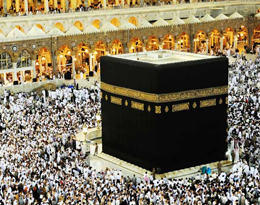
The spiritual experience of Umrah — Tawaf around the Kaaba, Sa'i between Safa and Marwa, the duas at Multazam, the peace of Roza Rasool in Madinah — is identical regardless of which hotel you walk from. What economy packages trade is hotel proximity and room exclusivity for a lower per-person cost. For the right traveler, that trade is a smart one, not a compromise.
Economy-tier hotels in Makkah are typically located in the Ajyad, Shisha, or Jarwal neighbourhoods — older areas of the city with established pilgrim infrastructure, small local restaurants, and regular shuttle bus routes to the Haram. They are not luxury properties. Rooms are functional, clean, and basic, with air conditioning, hot water, and typical Pakistani-style shared bathrooms in some older buildings. Modern economy properties have ensuite bathrooms; older ones in the same tier may not.
In Madinah, economy hotels are generally located within a 10–20 minute walk of Masjid Nabawi, in the established pilgrim areas south and east of the mosque complex. The atmosphere in Madinah is noticeably calmer than Makkah, and the walking distances in economy accommodation here are less physically demanding — Madinah's pilgrim district is more compact, and the cooler climate (relative to Makkah) makes the walk more manageable.
Economy-tier hotels well-known to Pakistani pilgrim agencies include properties like Al Wesam Hotel, Fajr Al Taqwa, Makarem Umm Al Hamam, and Al Massa Hotel in Makkah — all verifiable on Google Maps, TripAdvisor, and Booking.com. Ask your agency for the specific property name before booking; vague responses like "a good economy property near the Haram" are a red flag worth pressing on.
Economy hotels in Makkah are typically 900 metres to 1.5 kilometres from the nearest Haram gate. In a normal city, 1.5km is a 15–18 minute walk. In Makkah during Umrah season, that walk passes through crowds, uneven paving, construction zones, and significant heat — particularly between 11am and 4pm. This is the real trade-off of an economy package, and you deserve an honest description of it rather than marketing language.
For a healthy adult under 60, this walk is entirely manageable. Many pilgrims describe it as a meaningful part of the pilgrimage rhythm — a moment of anticipation and reflection before each session at the Haram. For a 70-year-old with knee pain, the same walk becomes a genuine daily challenge that compounds over 10 days.
Most economy packages include shuttle bus service between the hotel and the Haram — typically scheduled around the five daily prayer times. This significantly reduces the practical impact of the distance for pilgrims who time their trips to the mosque around prayer schedules. The shuttle is not always door-to-door; sometimes there's a short walk to the shuttle stop. Confirm the shuttle schedule and pickup point with your agency before departure, not on arrival in Makkah.
The default accommodation configuration in economy packages is triple or quad sharing — meaning 3 or 4 pilgrims of the same gender in one room. For couples or families, this means being separated across gender-divided rooms unless you book a private configuration at an added cost (which effectively moves you into 3-star pricing territory).
For solo male pilgrims, quad sharing with other Pakistani men is very commonly described positively — shared rooms become a source of companionship, collective duas, and a sense of communal worship that individual private travel doesn't provide. For solo female pilgrims, agencies typically arrange sharing rooms with other women from the same group.
Ask your agency whether the economy package can be configured to keep family members in adjacent rooms or at least on the same floor. Many agencies accommodate this without upgrading the entire package to 3-star — it's worth asking before assuming you'll be separated completely.
| Feature | Economy Package | 3-Star Package |
|---|---|---|
| Hotel distance (Makkah) | 900m – 1.5km | 600m – 1km |
| Room sharing | Triple / Quad | Double / Triple |
| Meals | Breakfast only | Half board (B&D) |
| Shuttle service | Yes (prayer-time schedule) | Yes (more frequent) |
| Typical duration | 9–10 nights | 12 nights |
| Best for | Solo, repeat, mobile pilgrims | Couples, first-timers, families |
The honest summary: you give up roughly 400 metres of walking distance, daily dinner, and some room privacy. You keep everything that actually constitutes an Umrah — the visa, the flights, the holy cities, the guided Ziyarat, and the spiritual experience itself. For many pilgrims, that's a clear and sensible trade.
An economy package during Ramadan costs significantly more than the same economy package during Muharram or Safar — yet the hotel, the flights, and the Umrah rituals are identical. If budget is the primary reason you're choosing economy, double down on that logic by also choosing an off-peak travel window. You'll find better hotel options closer to the Haram within the economy tier during off-season, and shorter queues for Tawaf.
A 14-night economy package often costs less than a 10-night 3-star package. For many pilgrims, four extra days in the holy cities is worth more than a slightly closer hotel room. Run the comparison explicitly with your agency before deciding purely on tier.
Economy packages usually include breakfast only. Madinah in particular has excellent local bakeries and fruit stalls within walking distance of most pilgrim hotels — buying simple, nutritious food locally is very affordable and gives you control over your midday energy levels without relying on expensive hotel restaurant meals.
Economy pilgrims walk more than 3-star or 4-star pilgrims — to the Haram, back from the Haram, to the shuttle stop, around the Haram itself during Tawaf. The single highest-impact packing decision for an economy Umrah is wearing comfortable, already broken-in footwear on day one rather than new sandals. Blisters by day three of a 14-day trip are avoidable and genuinely miserable.
Ask your group leader on arrival day for the exact shuttle pickup times and the shuttle stop location. Then plan your Haram visits around this schedule — arriving at the shuttle stop 10–15 minutes early rather than 2 minutes late saves you a 30-minute wait or a 1.5km walk in the afternoon heat.
Economy tier covers a wide range — from clean, functional properties 900 metres from the Haram to borderline-acceptable accommodation 2km away. The difference within the economy tier itself is meaningful. Always ask for the exact hotel name and verify the walking distance on Google Maps before paying.
The economy tier refers only to the hotel category — visa processing quality, flight booking, Ziyarat arrangements, and group leader support are handled identically by any legitimate agency regardless of tier. If an agency suggests that a cheaper package means a slower or lower-priority visa service, that's a fabricated upsell, not a real distinction.
Some very cheap economy packages do not include a shuttle — they rely entirely on pilgrim mobility for the full distance. This is typically disclosed only in the fine print. Confirm shuttle service is explicitly included and that it operates at prayer times before paying.
If you've never shared a hotel room with strangers before, walk into it prepared. You'll be sharing bathroom time, sleeping schedules, and a modest amount of living space with 2–3 other pilgrims. Most describe the experience positively afterward — the shared spiritual purpose creates natural goodwill. But going in with a realistic expectation prevents the room configuration from becoming a distraction from the trip itself.
Yes — provided it's booked through a licensed Hajj and Umrah operator. Economy refers only to hotel tier, not to the legal or safety standard of the package. The visa, flights, and Saudi ground arrangements are handled under the same regulatory framework as any other tier.
Not by default — standard economy configuration separates genders into same-gender sharing rooms. Couples wanting a private or double room together typically need to pay the price difference to a 3-star private room configuration. Ask your agency for the specific options before assuming.
Shuttles in most economy packages run around the five prayer times: Fajr, Dhuhr, Asr, Maghrib, and Isha. Some agencies run additional midday and evening services. Confirm the exact schedule with your agency before departure, as it varies by hotel and operator.
In most cases, yes. Some agencies include dinner as well — always ask for an explicit meal plan list, not just "economy package," since this varies. Local restaurants near economy hotels in both Makkah and Madinah serve affordable Pakistani-style food suitable for pilgrims.
With shuttle service included, most pilgrims attend the Haram for all five prayers without issue. The shuttle makes the distance manageable. Without a shuttle — which should be confirmed before booking — the 1–1.5km walk in Makkah's afternoon heat becomes a real consideration.
Yes, but they sell out the fastest because Ramadan demand is highest and economy seats have the lowest margin. Book at least 8–10 weeks before Ramadan to have a realistic selection of economy options rather than being pushed toward 3-star by default due to availability.
Sometimes, depending on hotel availability closer to the travel date. Upgrades mid-booking are not guaranteed and will carry the price difference plus potentially a change fee. It's better to choose your tier correctly at booking rather than planning to upgrade later.
Our economy packages include a group Ziyarat tour covering Jabal-e-Noor, Jabal-e-Uhud, Masjid-e-Quba, and the primary historical sites in Madinah. Confirm Ziyarat inclusion explicitly with any agency — some economy packages treat it as a paid add-on.
An economy Umrah package, chosen with clear expectations and booked through a licensed agency, is a fully valid path to performing one of Islam's most important acts of worship. The pilgrimage itself is indifferent to which hotel tier you stay in — what it responds to is your niyyah, your preparation, and your presence. The rest is logistics.
Each city page shows the Economy options and live departures for pilgrims from that city:
Send your dates and who is travelling, and you’ll get Economy hotel names, flights and the full price per person in writing.