Economy Umrah Package
Budget / 2–3 star hotels
Current price on request
Get Economy Quote
What Economy includes
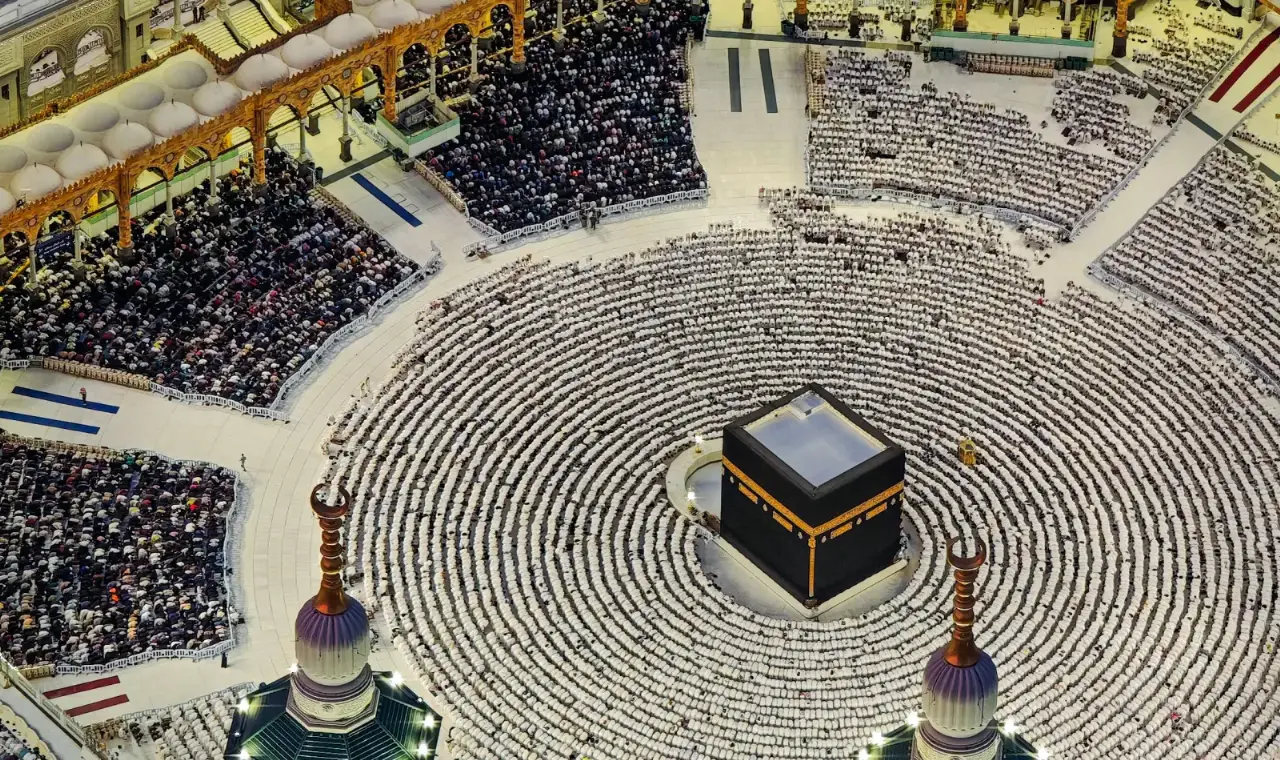
Find your Balochistan city, see which airport you’ll fly from, and compare Economy to 5 Star packages with a written Balochistan quote before you pay.
Confirmed group seats from Karachi for pilgrims across Balochistan — compare hotels and room prices, then book on WhatsApp.
Per-person PKR prices for Balochistan travellers come from live group inventory (updated 8 Oct 2026, 8:52 pm PKT); hotels are “or similar”, seats and prices change, and your WhatsApp quote confirms the final price, hotels and inclusions.
Each Balochistan city page covers its usual airport, travel to it and package options.
Share your plans for Umrah from Balochistan and the details open in WhatsApp, ready for you to check and send.
Budget / 2–3 star hotels
3 star hotels
4 star hotels
5 star hotels
A 15-day example from Balochistan — nights and category can change.
| Package | Duration | Makkah nights | Madinah nights | Hotel category | Sharing | Flights | Visa | Transport | Price | Action |
|---|---|---|---|---|---|---|---|---|---|---|
| Economy | 7–21 days (example: 15) | 8 | 6 | Budget / 2–3 star | Quad / shared | Return flights (full package) | Nusuk Umrah visa | Airport transfers + Makkah–Madinah | Current price on request | Get quote |
| 3 Star | 7–21 days (example: 15) | 8 | 6 | 3 star | Double, triple, quad | Return flights (full package) | Nusuk Umrah visa | Airport transfers + Makkah–Madinah | Current price on request | Get quote |
| 4 Star | 7–21 days (example: 15) | 8 | 6 | 4 star | Double, triple, quad | Return flights (full package) | Nusuk Umrah visa | Airport transfers + Makkah–Madinah | Current price on request | Get quote |
| 5 Star | 7–21 days (example: 15) | 8 | 6 | 5 star | Double, triple, quad | Return flights (full package) | Nusuk Umrah visa | Airport transfers + Makkah–Madinah | Current price on request | Get quote |
Prices change daily. What moves the price
Check Available 2026 PackagesPilgrims from Balochistan usually fly from whichever of these 2 airports is closest to home (routes checked 25 September 2026):
Connecting options, Ihram timing and baggage rules for Balochistan travellers are covered in our Umrah flights guide.
Hotels, inclusions, prices, documents and departure day are covered once in our full guide — choose what your Balochistan trip needs:
Balochistan pilgrims primarily depart from Quetta International Airport, which operates direct charter and scheduled flights to Jeddah during Umrah and Hajj seasons. Pilgrims from smaller Balochistan cities — Turbat, Khuzdar, Chaman, Gwadar — typically travel to Quetta for their departure or, in some cases, connect through Karachi. Balochistan's vast geography means agency pickup coverage requires explicit confirmation for each city. Despite the logistical distance, Balochistan maintains a strong and consistent Umrah travel tradition.
Balochistan is Pakistan's largest province by area and its most geographically challenging for Umrah travel logistics. Cities are separated by long distances, road infrastructure varies significantly across the province, and international flight connectivity outside Quetta is limited. These realities don't make Umrah from Balochistan significantly harder — they simply mean the logistical arrangements need more explicit confirmation than in provinces with denser urban infrastructure.
Quetta, as the provincial capital with the best airport connectivity, serves as the departure hub for the majority of Balochistan's Umrah pilgrims. For pilgrims from coastal areas around Gwadar or eastern Balochistan, Karachi is sometimes the more practical departure point and should be discussed with your agency at the time of booking.
| City | Departure Arrangement |
|---|---|
| Quetta | Direct flights to Jeddah available (PIA, seasonal charter); primary Balochistan hub |
| Turbat, Khuzdar | Road to Quetta or domestic flight; domestic connection required |
| Chaman | Road to Quetta (~2.5 hours); depart from Quetta |
| Gwadar | Gwadar Airport has limited connectivity; Karachi departure often more practical |
Quetta International Airport operates scheduled PIA services to Jeddah, with additional charter operations during peak Umrah season (Ramadan and Hajj). Flight frequency from Quetta is lower than from Karachi or Lahore — typically 2–4 departures per week on Jeddah routes outside peak season. This lower frequency means flexibility on travel dates is more limited for Balochistan pilgrims, and booking well ahead is even more important than it is from higher-frequency departure cities.
For Quetta-based pilgrims, reputable agencies with Balochistan coverage typically arrange document pickup within the city. For more distant Balochistan cities, courier-based document submission is the practical approach — passports and required documents dispatched via tracked courier to the agency, processed, and returned via the same method. Allow generous time for this process: add a week to standard processing timelines for courier transit in each direction, and submit documents at least 7–8 weeks before your intended travel date.
Yes — PIA operates direct Quetta–Jeddah services, with additional frequency during Ramadan and Hajj season. Outside peak season, confirm current flight schedules with your agency rather than assuming frequency, as Quetta–Jeddah services have less consistent year-round scheduling than Lahore or Karachi routes.
Yes — and for many Gwadar-area pilgrims, Karachi's superior international connectivity and flight frequency make it the more practical departure point. Discuss this option with your agency when booking; a good agency will recommend the departure point that serves your geography best rather than defaulting to Quetta for all Balochistan bookings.
At least 8–10 weeks — and for Quetta-departure Ramadan packages specifically, even earlier is advisable. Limited flight capacity from Quetta compared to larger cities means Ramadan departure seats are allocated to agencies well in advance; waiting until 4–5 weeks before Ramadan often means accepting inferior options or being routed through Karachi or Lahore instead.
Balochistan's pilgrims bring one of Pakistan's oldest and most sincere traditions of devotion to the Haram — the province's Umrah culture predates the modern agency system by generations. Connecting that tradition to the practical standards of a well-verified package — confirmed hotel proximity, written itinerary, licensed agency, timely document processing — is all that's needed to translate that devotion into a smooth, meaningful pilgrimage experience.
Tell us your Balochistan town, travel dates and who is travelling, and you’ll get hotel names, flights and the full price per person in writing.